Supraventricular Tachycardia in Children: Care Instructions
Overview
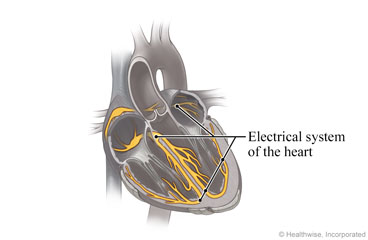
When your child has supraventricular tachycardia (SVT), it means that sometimes their heart beats very fast.
This fast rhythm is caused by connections that don't work right in the electrical system of the heart.
Most children with SVT can enjoy their normal activities. But it can cause symptoms, like a fluttering in the
chest (palpitations), chest discomfort, and feeling lightheaded or tired.
Treatments can stop SVT. Treatments that are done in a hospital include medicine, cardioversion, or a
procedure called catheter ablation.
There are things you and your child can do to help prevent and stop SVT when it happens. Your child may take
medicine. Your doctor may also suggest that your child try vagal maneuvers to help slow their heart rate when
they have an episode. The doctor can show you and your child how to do vagal maneuvers.
Follow-up care is a key part of your child's treatment and safety. Be sure to make and go to all
appointments, and call your doctor if your child is having problems. It's also a good idea to know your
child's test results and keep a list of the medicines your child takes.
How can you care for your child at home?
-
If your child takes medicine, call your doctor if you think your child is having a problem with a
medicine. You will get more details on the specific medicines your doctor prescribes.
-
If the doctor showed you and your child how to do vagal maneuvers, your child can try them during an
episode. These maneuvers include bearing down or putting an ice-cold, wet towel on your child's face.
-
Help your child avoid drinks with caffeine.
-
Do not give your child over-the-counter decongestants. They often contain ingredients that make the heart
beat faster (stimulants).
-
Monitor your child's condition by keeping a diary of any SVT episodes. Bring this to your child's doctor
appointments. Start by counting your child's heart rate (take their pulse). Older children can learn to
check and record their own heart rate. To check the heart rate:
-
Gently place 2 fingers of your hand on the inside of your child's wrist, below the thumb.
-
Count the beats for 30 seconds.
-
Then double the result to get the number of beats per minute.
-
After you check your child's heart rate, write down:
-
How fast or slow your child's heart was beating.
-
If the heart rhythm was regular or irregular.
-
What symptoms your child had.
-
The time of day the symptoms occurred.
-
How long the symptoms lasted.
-
What your child was doing when the symptoms started.
-
What may have helped the symptoms go away.
When should you call for help?
 Call 911
anytime you think your child may need emergency care. For example, call if:
Call 911
anytime you think your child may need emergency care. For example, call if:
Call your doctor now or seek immediate medical care if:
Watch closely for changes in your child's health, and be sure to contact your doctor if:
Current as of: June 24, 2023
Content Version: 14.0
Care instructions adapted under license by your
healthcare professional. If you have questions about a medical condition or this instruction, always ask
your healthcare professional. Healthwise, Incorporated disclaims any warranty or liability for your use of
this information.