Neck Strain in Children: Care Instructions
Your Care Instructions
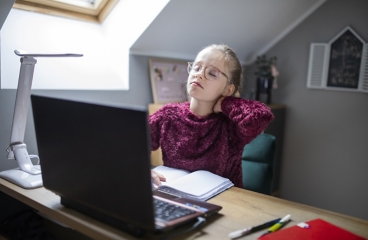
Your child has strained the muscles and ligaments in their neck. A sudden, awkward movement can strain the
neck. This often occurs with falls or car accidents or during certain sports. Everyday activities like using a
computer or sleeping can also cause neck strain if they force the neck to be in an awkward position for a long
time.
It is common for neck pain to get worse for a day or two after an injury, but it should start to feel better
after that. Your child may have more pain and stiffness for several days before it gets better. This is
expected. It may take a few weeks or longer for it to heal completely. Good home treatment can help your child
get better faster and avoid future neck problems.
Follow-up care is a key part of your child's treatment and safety. Be sure to make and go to all
appointments, and call your doctor if your child is having problems. It's also a good idea to know your
child's test results and keep a list of the medicines your child takes.
How can you care for your child at home?
-
Try heat or ice, whichever feels better. Apply it for 10 to 20 minutes at a time, several times a day. Put
a thin cloth between the heat or ice and your child's skin. You might also try switching between heat and
ice.
-
Be safe with medicines. Read and follow all instructions on the label.
-
If your child is not taking a prescription pain medicine, ask your doctor if your child can take an
over-the-counter medicine.
-
If the doctor gave your child a prescription medicine for pain, give it as prescribed.
-
Store your child's prescription pain medicines where no one else can get to them. When your child is
done using them, dispose of them quickly and safely. Your local pharmacy or hospital may have a drop-off
site.
-
Gently rub the area to relieve pain and help with blood flow. Do not massage the area if your child says
that it hurts to do so.
-
Help your child to not do anything that makes the pain worse. Have your child take it easy for a couple of
days. Your child can do usual activities if they do not hurt their neck or put it at risk for more stress or
injury.
-
Have your child try sleeping on a special neck pillow. Place it under the neck, not under the head.
Placing a tightly rolled towel under your child's neck while they sleep will also work. If your child uses a
neck pillow or rolled towel, do not let them use another pillow at the same time.
-
To prevent future neck pain, have your child do exercises to stretch and strengthen the neck and back.
Teach your child to use a good posture, safe lifting techniques, and proper body mechanics.
When should you call for help?
 Call 911
anytime you think your child may need emergency care. For example, call if:
Call 911
anytime you think your child may need emergency care. For example, call if:
Call your doctor now or seek immediate medical care if:
|
|
-
Your child has new or worse symptoms in his or her arms, legs, chest, belly, or buttocks. Symptoms
may include:
-
Numbness or tingling.
-
Weakness.
-
Pain.
|
|
|
|
Watch closely for changes in your child's health, and be sure to contact your doctor if:
Current as of: July 17, 2023
Content Version: 14.0
Care instructions adapted under license by your
healthcare professional. If you have questions about a medical condition or this instruction, always ask
your healthcare professional. Healthwise, Incorporated disclaims any warranty or liability for your use of
this information.