Liver Transplant: Before Your Child's Surgery
What is a liver transplant?
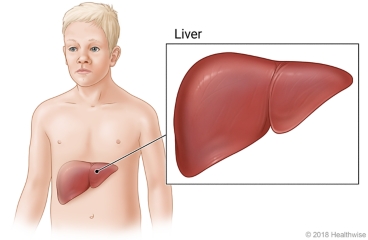
A liver transplant is surgery to give your child a healthy liver
from another person. Your child may get a whole new liver or just
part of a new liver. Your child could get part of a liver from
someone you know or from another living donor. Or your child could
get a whole liver from someone who has died. The wait for a new
liver varies but depends on how sick your child is. During that
time, your doctor will update the transplant team about your child's
condition. When you get a call from the transplant team, you'll need
to bring your child to the hospital right away.
To do the surgery, the doctor makes a cut (incision) in your child's
upper belly. Then the doctor removes the liver. Next, the doctor
connects the blood vessels of the new liver to your child's blood
vessels. The doctor also connects the bile duct of the new liver to
your child's bile duct.
After surgery, the new liver will start to do the work that your
child's old liver could not.
Your child will probably spend at least a couple of weeks in the
hospital. Your child will go back for frequent checkups for about a
month after that. Most children are able to go back to school in
about 3 months. Your transplant team will give you a follow-up
schedule.
How do you prepare for surgery?
Surgery can be stressful for both your child and you. This
information will help you understand what you can expect. And it
will help you safely prepare for your child's surgery.

Preparing for surgery
What happens on the day of surgery?
-
Follow the instructions exactly about when your child should stop
eating and drinking. If your doctor told you to have your child
take any medicines on the day of surgery, have your child take
them with only a sip of water.
-
Have your child take a bath or shower before they come in for
surgery. Do not apply lotions, perfumes, deodorants, or nail
polish.
-
Do not let your child wear contact lenses. Bring your child's
glasses or contact lens case.
-
Be sure your child has something that's a reminder of home. A
special stuffed animal, toy, or blanket may be comforting. For an
older child, it might be a book or music.
At the hospital or transplant center
-
A parent or legal guardian must accompany your child.
-
When you arrive at the hospital or transplant center, your child
will be prepared for surgery right away. Final tests will be done
to make sure that your child is ready and that the donor organ
will likely work for your child.
-
Your child will be kept comfortable and safe by the anesthesia
provider. Your child will be asleep during the surgery.
-
The surgery will take several hours.
-
After surgery, your child will stay in the pediatric intensive
care unit (PICU) for 2 to 3 days or more. The amount of time will
depend on your child's condition. The staff will watch your
child's condition. The doctor will talk to you about the surgery.
-
A ventilator may be needed to help your child breathe after the
surgery.
When should you call your doctor?
Current as of: October 19, 2023
Content Version: 14.0
Care instructions adapted under license by your healthcare
professional. If you have questions about a medical condition or
this instruction, always ask your healthcare professional.
Healthwise, Incorporated disclaims any warranty or liability for
your use of this information.