Mouth Injury in Children: Care Instructions
Your Care Instructions
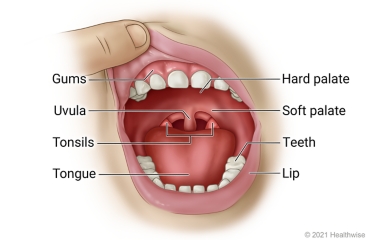
Mouth injuries are common in children. They may involve the teeth, jaw, lips, tongue, inner cheeks, or gums.
A mouth injury can also affect the roof of your child's mouth, neck, or tonsils.
Your child's teeth may be injured during a fall. An injury can crack, chip, or break a tooth or make a tooth
change color. A tooth also may be knocked out, loosened, moved, or jammed into the gum.
An injury to the roof of your child's mouth, the back of your child's throat, or a tonsil can injure deeper
tissues in your child's head or neck. These injuries can happen when a child falls with a pointed object, such
as a pencil, in their mouth. Make sure that your child doesn't walk or run with objects in their mouth. This
will help keep your child safe.
Your child also may bite their tongue because of a seizure, a car crash, or another injury.
A cut or tear to the tongue can bleed a lot. Small injuries may often heal on their own. If the injury is
long or deep, it may need stitches that dissolve over time.
Follow-up care is a key part of your child's treatment and safety. Be sure to make and go to all
appointments, and call your doctor if your child is having problems. It's also a good idea to know your
child's test results and keep a list of the medicines your child takes.
How can you care for your child at home?
-
Apply a cold compress to the injured area. Or have your child suck on a piece of ice or a flavored ice
pop.
-
Rinse your child's wound with warm salt water right after meals. Saltwater rinses may relieve some pain.
To make a saltwater solution for rinsing the mouth, mix 1 tsp of salt in 1 cup of warm water.
-
Have your child eat soft foods that are easy to swallow.
-
Avoid giving your child foods that might sting. These include salty or spicy foods, citrus fruits or
juices, and tomatoes.
-
If a jagged tooth or orthodontic wire or bracket is poking your child, roll a piece of melted candle wax
or orthodontic wax and press it onto the part that is poking. Use a pencil eraser to press a broken wire
toward the teeth. These are only short-term measures to use until you can see your child's dentist or
orthodontist to fix the problem.
-
Be safe with medicines. Give pain medicines exactly as directed.
-
If the doctor gave your child a prescription medicine for pain, give it as prescribed.
-
If your child is not taking a prescription pain medicine, ask the doctor if your child can take an
over-the-counter medicine.
-
If the doctor prescribed antibiotics for your child, give them as directed. Do not stop using them just
because your child feels better. Your child needs to take the full course of antibiotics.
-
Try using a topical medicine, such as Orabase, to reduce mouth pain. If your child is under 2 years of
age, ask your doctor if your child can use this medicine.
When should you call for help?
 Call 911
anytime you think your child may need emergency care. For example, call if:
Call 911
anytime you think your child may need emergency care. For example, call if:
Call your doctor now or seek immediate medical care if:
Watch closely for changes in your child's health, and be sure to contact your doctor if:
Current as of: July 10, 2023
Content Version: 14.0
Care instructions adapted under license by your
healthcare professional. If you have questions about a medical condition or this instruction, always ask
your healthcare professional. Healthwise, Incorporated disclaims any warranty or liability for your use of
this information.