Painful Menstrual Cramps in Teens: Care Instructions
Overview
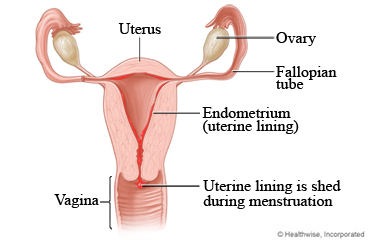
Painful menstrual cramps (called dysmenorrhea) can occur during or just before your period. The cramping can
involve your lower belly, back, or thighs. And the pain from these cramps can range from mild to severe. You
may also have diarrhea, constipation, or nausea. Or you may get dizzy.
Pain medicine and home treatment can help ease your cramps.
Follow-up care is a key part of your treatment and safety. Be sure to make and go to all
appointments, and call your doctor if you are having problems. It's also a good idea to know your test results
and keep a list of the medicines you take.
How can you care for yourself at home?
-
Take anti-inflammatory medicines to reduce pain, such as ibuprofen (Advil, Motrin) and naproxen (Aleve),
for pain from cramps.
-
Talk to your doctor or pharmacist before you take any of these medicines. They may not be safe if you
are taking other medicines or have other health problems.
-
Start taking the recommended dose of pain medicine as soon as you start to feel pain or the day before
your period starts. Keep taking the medicine for as many days as your cramps last.
-
If anti-inflammatory medicines do not relieve the pain, try acetaminophen (Tylenol).
-
Do not take two or more pain medicines at the same time unless the doctor told you to. Many pain
medicines have acetaminophen, which is Tylenol. Too much acetaminophen (Tylenol) can be harmful.
-
Be safe with medicines. Read and follow all instructions on the label.
-
Put a warm water bottle, a heating pad set on low, or a warm cloth on your belly. Heat improves blood flow
and may relieve pelvic pain.
-
Lie down and put a pillow under your knees, or lie on your side and bring your knees up to your chest.
This will help relieve back pressure.
-
Get plenty of exercise every day. This improves blood flow and may decrease pain. Go for a walk or jog,
ride your bike, or play sports with friends.
When should you call for help?
 Call your
doctor now or seek immediate medical care if:
Call your
doctor now or seek immediate medical care if:
Watch closely for changes in your health, and be sure to contact your doctor if:
Current as of: November 27, 2023
Content Version: 14.0
Care instructions adapted under license by your
healthcare professional. If you have questions about a medical condition or this instruction, always ask
your healthcare professional. Healthwise, Incorporated disclaims any warranty or liability for your use of
this information.