Normal Menstrual Cycle in Teens: Care Instructions
Overview
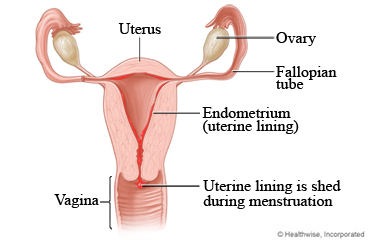
The menstrual cycle is the series of changes the body goes through to prepare for a possible pregnancy. About
once a month, the lining of the uterus (endometrium) starts to thicken. Then an ovary releases an egg. If the
egg is fertilized by sperm and attaches to the lining of the uterus (implants), pregnancy begins. If the egg
isn't fertilized or a fertilized egg doesn't implant, the uterus sheds its lining. This is the monthly
menstrual bleeding, or period. Periods happen from the early teen years until menopause, around age 50.
A normal cycle for teens lasts about 21 to 45 days. Count from the first day of one menstrual period until
the first day of your next period to find the number of days in your cycle.
You may have no discomfort during your menstrual cycles. Or you may have mild to severe symptoms. If you have
problems, ask your doctor about over-the-counter medicine. It may help relieve pain and bleeding.
Follow-up care is a key part of your treatment and safety. Be sure to make and go to all
appointments, and call your doctor if you are having problems. It's also a good idea to know your test results
and keep a list of the medicines you take.
How can you care for yourself at home?
-
Keep track of the day you start your menstrual period each month. Also note how long your period lasts. If
your cycle is regular, it can help you predict when you will have your next period.
-
To help with symptoms, get regular exercise, eat healthy foods, and try to reduce stress. It may also help
to limit food or drinks that make your symptoms worse, such as alcohol or caffeine.
To relieve menstrual cramps
-
Put a warm water bottle or a warm cloth on your belly. Or use a heating pad set on low. Heat improves
blood flow and may relieve pain.
-
To relieve back pressure, lie down and put a pillow under your knees. Or lie on your side and bring your
knees up to your chest.
-
Get regular exercise. It improves blood flow, which may decrease pain.
-
Ask your doctor if you can take anti-inflammatory medicines to reduce pain. These include ibuprofen
(Advil, Motrin) and naproxen (Aleve). Be safe with medicines. Read and follow all instructions on the label.
Start taking the recommended dose when symptoms begin or one day before your menstrual period starts.
To manage menstrual bleeding
-
Tampons range from small to large, for light to heavy flow. You can place a tampon in your vagina by using
the slender tube packaged with the tampon. Or you can place it with a finger. Change the tampon at least
every 4 to 8 hours. This helps prevent leakage and infection.
-
Pads range from thin and light to thick and super absorbent. They protect your clothing, with or without
using a tampon.
-
Menstrual cups are inserted in the vagina to collect menstrual flow. You remove the menstrual cup to empty
it. Some are disposable and some can be washed and used again.
Tampons or menstrual cups may work well for activities that you can't use pads, such as swimming. You may
have to try different products to find out what is right for you. Whichever you use, be sure to change it
regularly. This helps prevent leaking or infection.
When should you call for help?
 Watch closely
for changes in your health, and be sure to contact your doctor if you have any problems.
Watch closely
for changes in your health, and be sure to contact your doctor if you have any problems.
Current as of: November 27, 2023
Content Version: 14.0
Care instructions adapted under license by your
healthcare professional. If you have questions about a medical condition or this instruction, always ask
your healthcare professional. Healthwise, Incorporated disclaims any warranty or liability for your use of
this information.